Most people assume tent season ends when the leaves fall. On Vancouver Island, that assumption costs hosts some of the best dates of the year. Venues are easier to secure between October and April, vendors have more availability, and a properly planned tent can feel as warm and polished as any banquet hall. The catch is simple. Cold, wet coastal weather punishes weak planning fast. This guide explains what changes when you book tent rentals Victoria hosts depend on outside the summer months, and how to get each detail right the first time.
Quick answer. A successful off-season tented event on Vancouver Island needs a structure built for wind and rain, fully enclosed sidewalls, heating sized to the space, and a booking made early enough for a proper site inspection. Expect winter tent pricing to run about 50% above summer rates between mid-October and mid-April, and plan heat, lighting, and ground conditions together rather than as afterthoughts.
Why Host a Tented Event in the Off Season?
A tent turns any property into a private venue on your terms. That matters most in cooler months, when holiday parties, corporate dinners and winter weddings compete for the same indoor halls. With a tent, you choose the location, the layout, the catering and the timeline without fighting over a booking calendar.
Black & White Event Rentals has supported events across Vancouver Island and the Gulf Islands since 1991, from Victoria and Sidney up through Nanaimo, Comox and Campbell River, so the crews have installed in nearly every coastal condition.
Which Tent Type Handles Cold and Wet Weather Best?
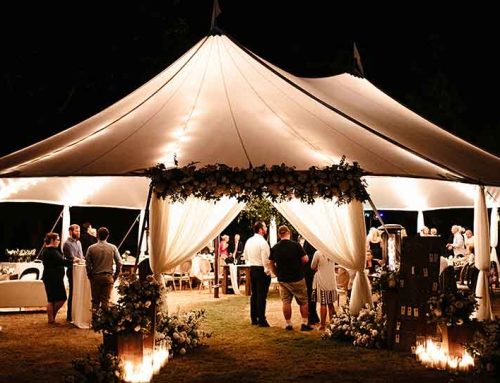
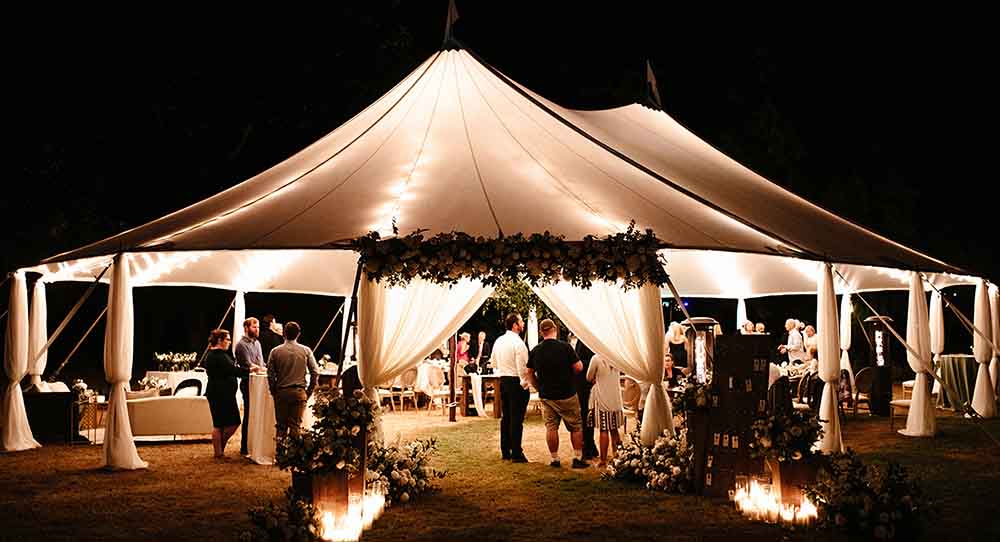
Marquee tents are high-peak, waterproof structures with a floating centre pole. That steep roofline sheds rain quickly and prevents water from pooling on the fabric, a real concern during long coastal downpours.
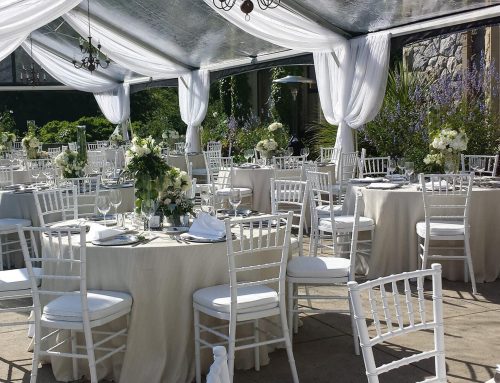
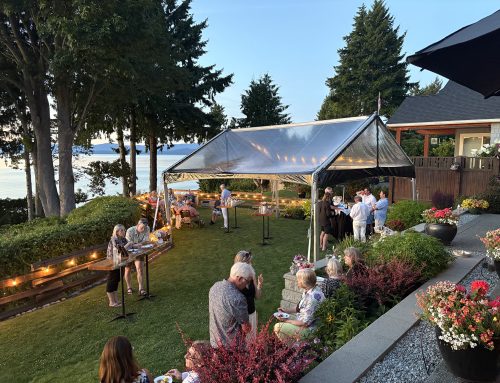
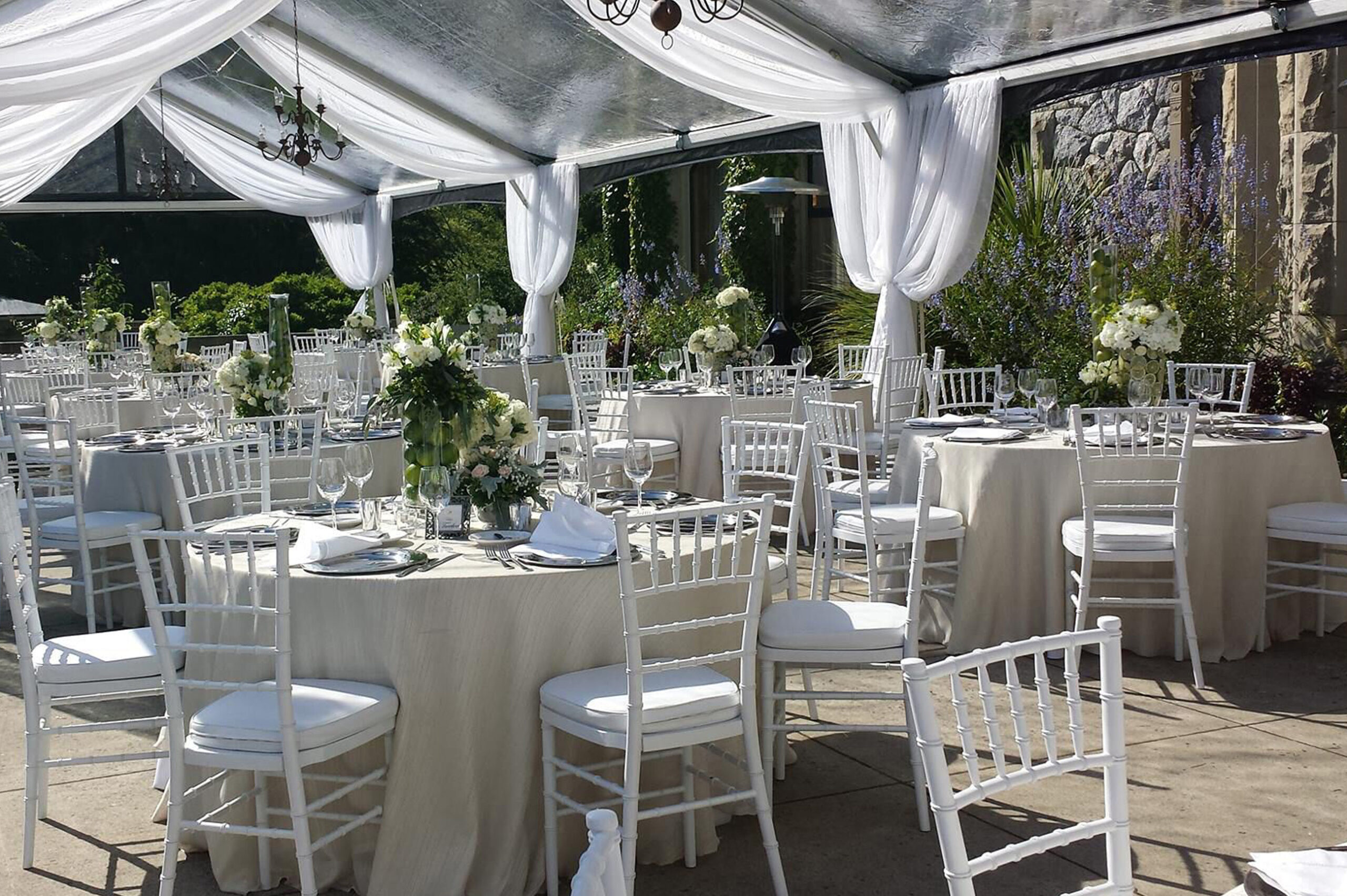
Jumbo Track tents use an aluminum track system and come in 20, 30, or 40-foot widths. Their sidewalls slide into built-in tracks rather than hanging from cables, which seals out drafts far better. For larger winter events, especially seated dinners, this is usually the strongest option. Clear top versions look striking at dusk.
Pop-up tents are lightweight and not fully waterproof. They are handy as a covered entrance or a coat check, but they should never be the main shelter for a winter event.
If your guest list is spread between two cities, the same logic applies. Planners searching for event tents rental Nanaimo options face the same mid-island rain and wind, so the structure choice matters just as much north of the Malahat as it does in Victoria.
How Big Should a Winter Tent Be?
The standard planning rule is about 10 square feet per guest for casual events and 12 square feet per guest for weddings and formal functions. You then add space for buffets, bars, stages, and dance floors.
Winter changes the math. In summer, guests drift onto the lawn, so a tent can feel generous even at capacity. In January, nobody leaves the covered space. You also need clearance around heaters, a coat area, and wider aisles for wet footwear. As a working rule, size up one step from what a summer calculation suggests.
For example, 80 guests at a seated dinner need roughly 960 square feet before you add a buffet, bar, and dance floor. Once heaters and a coat area are added, a larger footprint is the safer choice. Use the tent sizing chart to compare layouts before you request a quote.
How Do You Keep a Rental Tent Warm?
Warmth comes from three layers working together, which are walls, a liner and heat.
Sidewalls are non-negotiable in winter. Options include opaque white walls, clear window walls, and solid white walls with cathedral windows. Clear or window walls keep the view without letting the wind in, which is a smart compromise at waterfront or garden sites.
A tent liner hides the frame and adds a soft ceiling that helps the space feel enclosed and finished. If you want to see the effect, the team shared an early look at a beautiful new tent liner that shows how much a liner changes the atmosphere.
Then comes heat. Propane patio heaters are the most common choice for tented events. Winter tents can be heated, but call the office first, because heated winter installations may need specific anchoring and placement advice. Never improvise with barbecues. Grilling is only allowed near designated 10×10 or 20×20 tents when requested in advance, and the grill must stay at least 10 feet away from the tent.
How Do You Protect Guests From Rain and Wind?
Anchoring is where professional installation earns its value. Tents are secured with steel stakes between 20 and 36 inches long, and the number and size depend on the tent size, expected wind load, and how long the structure stays up. Utility locates are required before any stake goes in. On asphalt, stakes leave small holes that can be patched with plugs, and on concrete, crews use bolted anchors instead.
Ground conditions deserve extra attention in wet months. A good lawn usually does not need a floor, but saturated winter ground is a different story, so discuss alternatives with the team if your site drains poorly. New sod is a firm no for at least a month, because unrooted sod separates and turns to mud under foot traffic.
Finally, think about the walk between spaces. Gutter and joiner systems can connect Marquee and Jumbo Track tents, creating covered walkways to catering or reception areas.
What Lighting and Decor Make a Winter Tent Feel Inviting?
In December, it is dark on Vancouver Island well before 5 pm. That means lighting is not decoration; it is infrastructure. Plan ambient light for the tent, task light for the bar and buffet, and pathway light from parking.
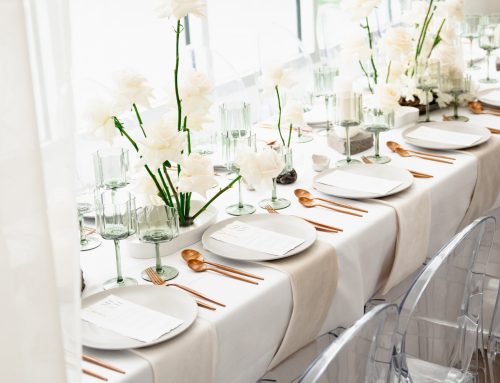
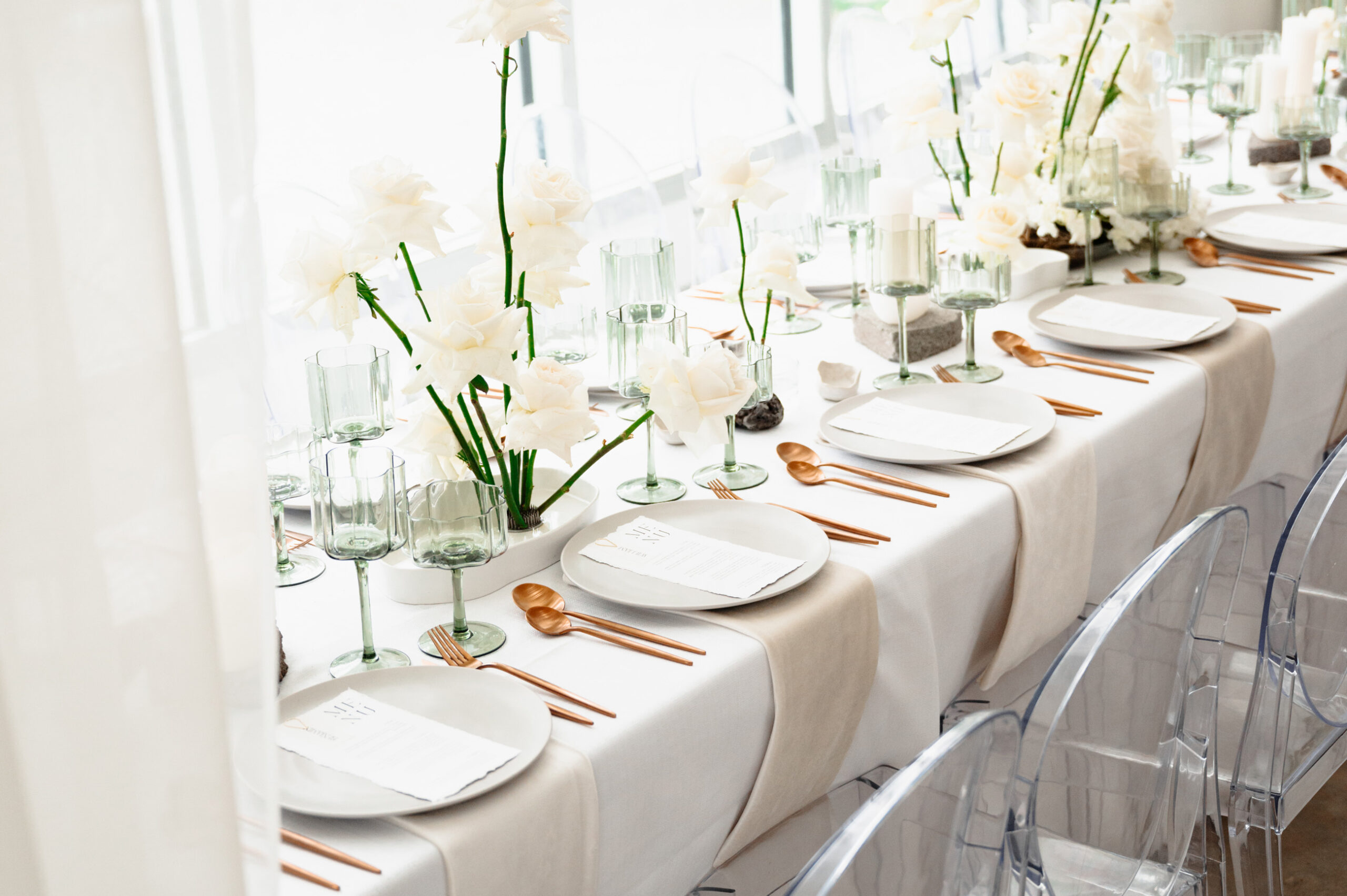
Warm bulbs, pole drapes, and layered textiles make a large space feel intimate. Browse lights, decor and linens to build a cohesive look, and consider bundling everything through one provider. Hosts who rely on Victoria event rentals from a single supplier avoid the classic winter headache of separate delivery windows, separate crews and separate invoices. For a sense of how dramatic a tented setting can become, the fairytale wedding in the woods at Qualicum Beach is worth a look.
When Should You Book Off Season Tent Rentals?
Earlier than you think. Tents are typically installed two to three days before the event, with pickup often on the Sunday or Monday afterward, and winter weather can shift that schedule. A site inspection is usually required before installation, and crews need drive-up truck access plus 5 to 15 feet of clearance around the tent.
A deposit of 25% to 50% secures your reservation. Permits are the host’s responsibility, and requirements vary by municipality and regional district, so contact your local office early. Holiday season dates fill quickly, which is why anyone comparing party rentals Victoria and party rentals Nanaimo suppliers for a December event should start the conversation in early fall. For broader planning, read the ultimate guide to party rentals in Victoria.
Plan Your Winter Event With Confidence
A cold-weather tented event is not a compromise. With the right structure, enclosed walls, safe heat, and smart lighting, it becomes one of the most memorable settings your guests will experience all year. Start early, book a site inspection, and let an experienced local team handle the anchoring and installation. Call 778 433 1282 or email [email protected] to begin planning your off-season event.
Frequently Asked Questions
Can you rent a tent in winter on Vancouver Island?
Yes. Professionally installed tents are available year-round. Between mid-October and mid-April, winter installations are priced at an additional 50% of the summer rate.
Can a rental tent be heated safely?
Yes. Winter tents can be heated with propane heaters. Call the rental office before your event so the team can advise on anchoring, heater placement, and safe clearances.
Do I need a permit for a tent in Victoria or Nanaimo?
Possibly. The host is responsible for permits, and the rules differ by municipality and regional district. Check with your local government before confirming your date.
Can I install a tent myself?
Only small ones. Customers can rent 10×10 and 10×20 pop-up tents for self-installation. Anything larger, including a 20×20, must be installed by a trained crew.
Where can I find more tent answers?
Review the full tent rental FAQs covering anchoring, decks, timing, and policies.